
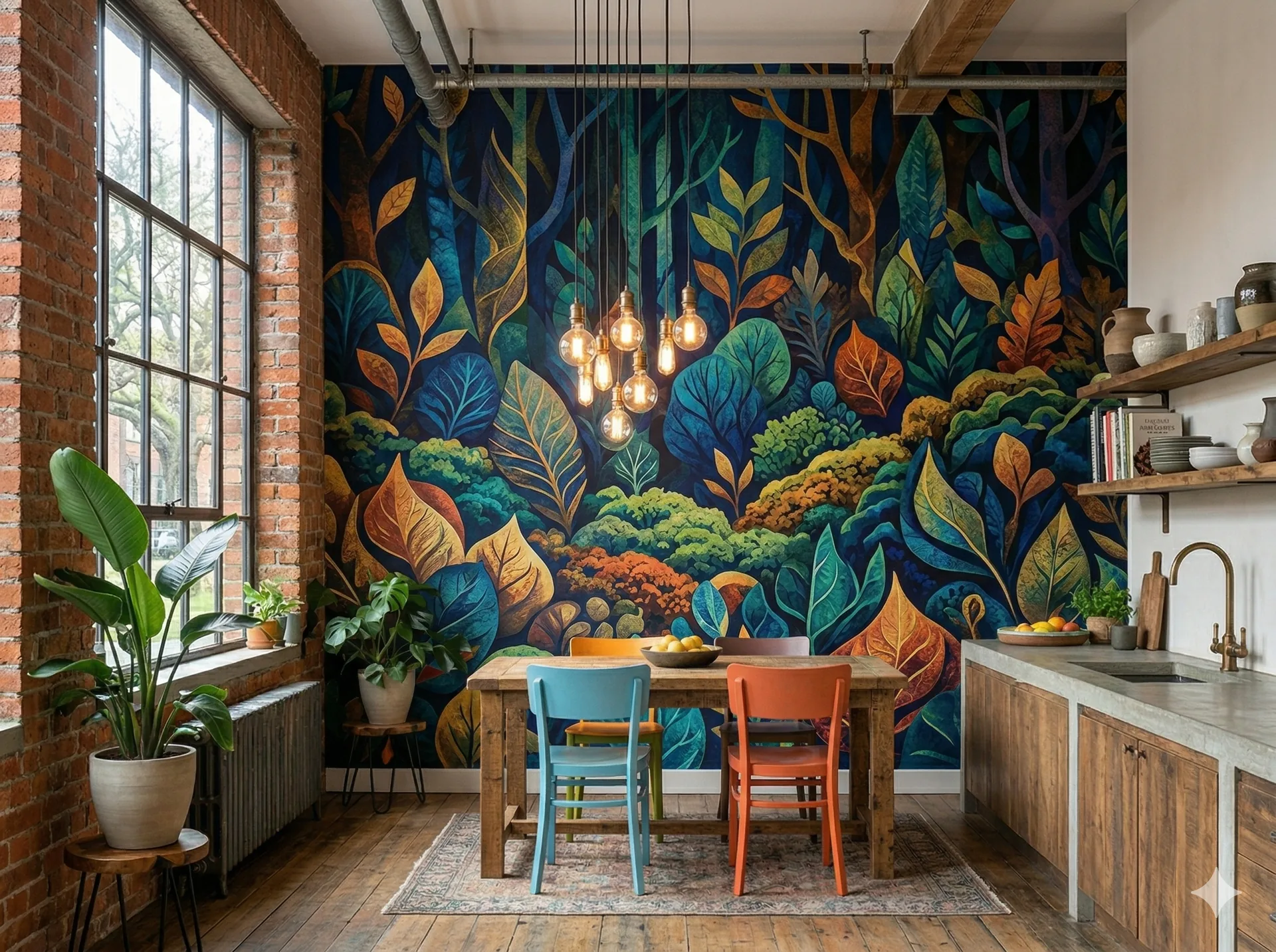
The image may be the starting point, but the material is chosen according to the wall and how the space will be used. Self-adhesive PVC and non-woven fabric differ in construction, surface and installation method. These questions will help you make a decision for the particular space.
What Is the Main Difference?
Self-adhesive PVC is a film with an adhesive layer. VividWalls offers it as a laminated print, and the substrate must be suitable for adhesion. VividWalls non-woven fabric is vinyl on a fibrous backing, with texture and installation using PVA textile adhesive.
“Non-woven” does not mean “PVC-free”. If your project requires a PVC-free material, explore the separate HP PVC-Free line, which is installed with water-activated adhesive.
The Materials Side by Side
| Characteristic | Self-Adhesive PVC | VividWalls Non-Woven Fabric |
|---|---|---|
| Construction | PVC film with adhesive layer and laminate | Vinyl on a non-woven backing |
| Surface | Smooth, with a laminated finish | 13 textures with different reliefs |
| Basic specification | 80 μm film | 250, 350 or 450 g/m² |
| Installation | Using its own adhesive layer | With PVA textile adhesive |
| Preparation | Check compatibility and adhesion to the substrate | Check the wall, primer and adhesive |
| Fire classification | Do not assume a classification without product documentation | Stated M2 classification; check against the project requirements |
When to Consider Self-Adhesive PVC
When you want a smooth graphic surface and the substrate allows film to adhere. Clarify whether it is a painted wall, panel, glass or another surface. The installation team should check compatibility and carry out a test.
Self-adhesive does not automatically mean easy removal without marks. The adhesive, paint and condition of the substrate determine the result. For a temporary project, discuss removal when choosing the material, not after the event.
When to Consider Non-Woven Fabric
When texture is part of the interior concept. Carina provides a fine, even relief, Andromeda is smooth with minimal texture, and Crux adds a linen effect. More pronounced surfaces change the feel of large areas of colour and detail.
The collection has a washable surface. For areas subject to frequent contact, explore scratch-resistant Taurus. Discuss maintenance conditions before including the material in the specification.
The Space’s Requirements Are Part of the Choice
Send fire-classification and documentation requirements with your first enquiry. VividWalls non-woven fabric has a stated M2 classification. HP PVC-Free has stated B1 and M1 classifications, plus GREENGUARD Gold certification when printed with HP Latex inks. The project designer assesses whether the specific documentation meets the brief.
For wet areas, do not choose based on the word “washable” alone. Direct splashes, steam, condensation, wall condition and cleaning are different conditions. Describe them so the appropriate material and installation can be assessed.
How to Compare Two Materials
- Choose the same section of the image for both samples.
- Examine them in the space’s lighting, both up close and from the normal viewing distance.
- Discuss the substrate, adhesive and joining method with the installation contractor.
- Record the exact material, texture and weight in the print brief.
VividWalls samples are offered at 50% of the selling price. We manufacture and deliver; your team arranges installation.
From Selection to Quotation
Send the wall dimensions, room use, a substrate photograph and a file link. Add the quantity, deadline and delivery address. Explore all materials, read more about non-woven fabric or request a quotation.