
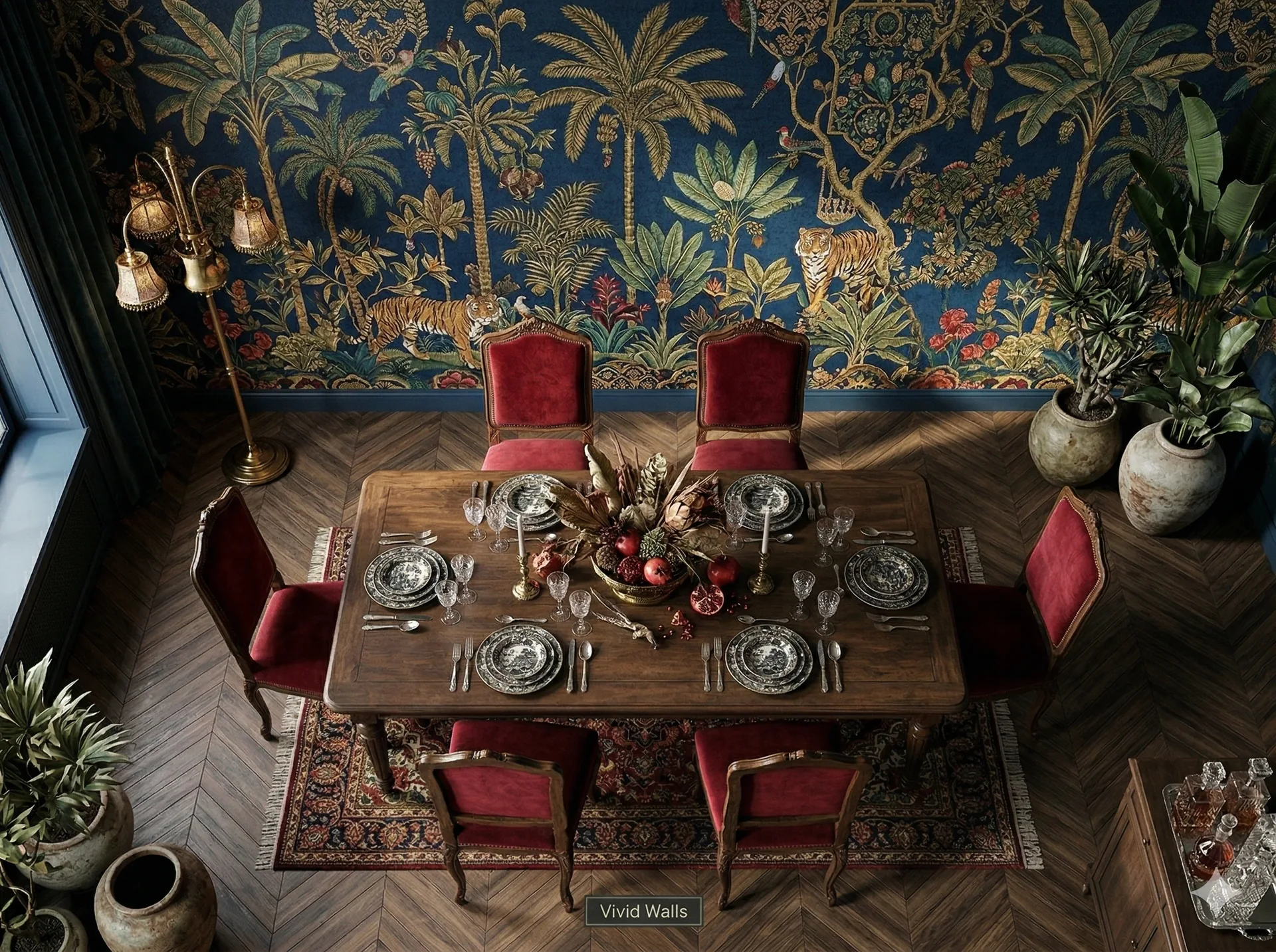
A good feature wall has a role in the space. It welcomes, directs the eye, unites a zone or expresses a brand’s character. Before choosing an image, decide what the wall should do and where it will be viewed from. Composition, scale and material follow.
1. A Panorama for a Lobby or Reception
A landscape can visually open up a space and establish the atmosphere as soon as you enter. Prepare the composition to the dimensions of the entire wall, marking the reception desk, doors and lighting. The horizon and main focal point should remain visible from the key viewpoints.
For photographic detail, explore Andromeda with its minimal texture or Carina with a fine, even relief. Assess the image on a sample too, particularly where light falls from the side.
2. Texture as the Leading Element
In a restrained interior, texture can carry much of the character. A soft colour on linen-effect Crux feels different from the same colour on the leather relief of Vela or the crumpled paper of Fornax.
Leave enough calm surfaces around the feature wall. This lets the relief show without competing with every other texture in the furnishings.
3. Geometry for a Hotel Room
The wall behind a bed lets you connect the wallpaper with the headboard, light fittings and bedside tables. Draw them on the wall elevation before setting the motif size. Important lines can align with the architecture instead of accidentally disappearing behind furniture.
For a series of rooms, retain the main composition and agree variants for different wall sizes. Give each version its own identifier for ordering and installation.
4. Original Art at the Scale of the Wall
Abstract painting, illustration or a photographic series can become the leading theme of an interior. Send the original file and assess which details need to remain visible when greatly enlarged.
You can continue the palette with canvas prints in other areas. A shared colour or motif connects rooms without requiring every wall to repeat the same image.
5. A Calm Background for a Workspace
In a meeting room or video-call area, wallpaper also forms part of the camera background. Assess the composition from a seated person’s eye level and check where the lighting falls. A more restrained motif leaves room for the people and work in front of the wall.
Fine-grained Pictor or vertically threaded Lacerta can add detail to a calm colour composition. The colour choice remains part of the office’s overall concept.
6. A Brand’s Identity in a Retail Space
Branded wallpaper can use original illustration, a graphic rhythm or a motif from the brand identity. Consider how it will look both up close and through the shop window or from the other end of the room.
For specific corporate colours, discuss a printed sample before producing the series. Screens and different materials reproduce colour differently. For several locations, send the shared brief and each site’s dimensions, quantities and address.
7. A Vertical Rhythm in a Corridor
In a long corridor, people experience the wall while moving. A repeating motif, vertical lines or a gradual colour transition can connect the different areas. Coordinate the rhythm with doors, signage and light fittings.
Consider contact and cleaning too. Discuss Auriga, 350 g/m², or scratch-resistant Taurus, 450 g/m², according to the conditions of the space. The weight and texture should serve the specific brief.
Before You Approve the Print
- Check the scale: place the composition on a wall elevation showing actual dimensions and furniture.
- Choose the material: assess the texture and print on site. Samples are offered at 50% of the selling price.
- Clarify the requirements: intended use, maintenance and fire-classification documentation where required for the project.
- Prepare for installation: your contractor checks the substrate and wall preparation.
- Confirm the timing: coordinate production and transport with the site schedule.
Explore VividWalls wallpaper materials. If you already have a direction, send your brief for a quotation. We will clarify how to take the idea through to the finished print.