
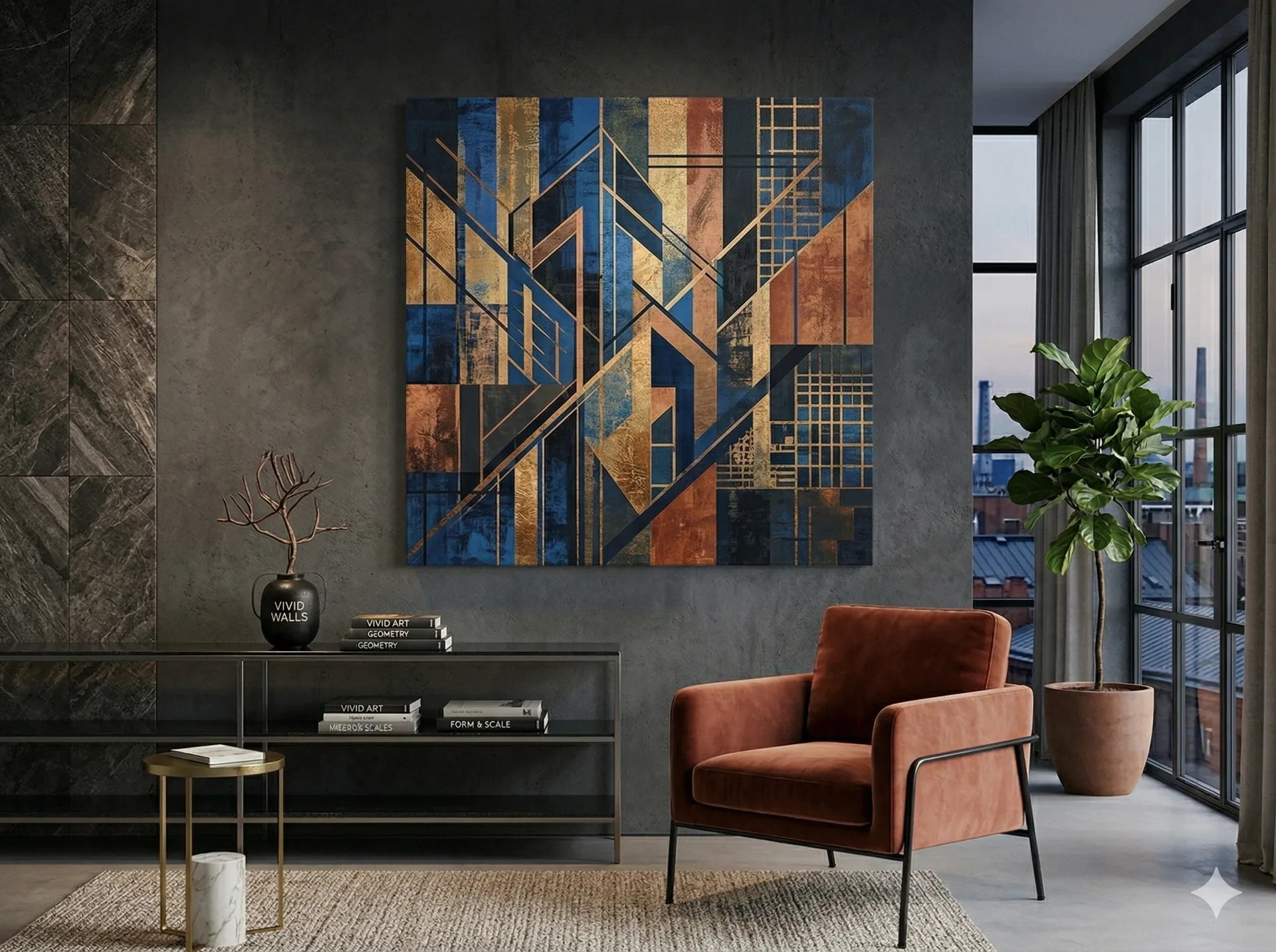
Well-planned hanging completes the work of the designer and manufacturer. The canvas should be in the right place, panels should follow a shared rhythm, and fixings should suit the wall and weight. Prepare these decisions before delivery, particularly for a series in a hotel or several business locations.
Agree the Position in the Interior
View the wall from the main positions: the entrance, seats and workstations. A canvas above furniture is perceived together with it. In a corridor or lobby, consider how the composition reads while moving.
There is no single height that works in every room. Set it in the project and check it with a full-size template. Mark the distance from light fittings, doors and other elements that could interfere.
Check the Finished Canvas
On receipt, inspect the packaging and finished work. Confirm the image orientation, stretcher profile and available hanging method. For several positions, check dimensions and files against the installation plan.
Protect the canvas face from pressure and dirt while preparing the work. Hold the canvas by its stretcher. If you have a question about the product, contact us before installation.
Choose Fixings for the Wall
The installation contractor should establish the substrate type and condition: concrete, brick, plasterboard or another construction. Fixing selection also depends on the actual weight, profile and hanging method of the finished canvas.
Follow the fixing manufacturer’s load ratings and instructions. Do not assume one wall-plug size suits every canvas or that self-adhesive hanging is acceptable on every paint finish. Check for concealed services before drilling.
Steps for a Single Canvas
- Mark the composition. Set the centre line and height according to the project.
- Measure the hanging points. Use the finished product; do not derive them solely from its overall dimensions.
- Install suitable fixings. Work according to the wall and fixing instructions.
- Hang and level. Check the canvas’s stability and position.
- Assess from a distance. Return to the main viewpoints and check its relationship with the furniture and lighting.
Compositions of Several Panels
Record the sequence, orientation and gaps between the parts. Alignment is particularly noticeable when an image continues across the panels. Arrange the parts on a protected surface and check the composition before hanging.
Work from a shared measured line, rather than from the ceiling or a neighbouring corner. Gaps form part of the overall dimensions. A triptych of three 40 cm panels with 5 cm gaps has an overall width of 130 cm. Keep the chosen spacing consistent throughout the set.
A Series for Several Rooms or Locations
Prepare a short installation sheet for each position: identifier, composition photograph, dimensions, height and orientation. In different rooms, check the position against the actual furniture, sockets and lighting.
Also decide who receives the delivery, where it will be stored before hanging and who signs off the final result. This organisation helps everyone work to the same brief.
Who Does What?
VividWalls manufactures and delivers canvas prints ready to hang. Your team arranges the hanging itself and the choice of fixings. Clarify any specific requirements when ordering.
If you have not yet chosen the format, start with the canvas sizing guidance. After hanging, use the care guide. For a project series, send your brief for a quotation.